Last Updated: 25 january 2026
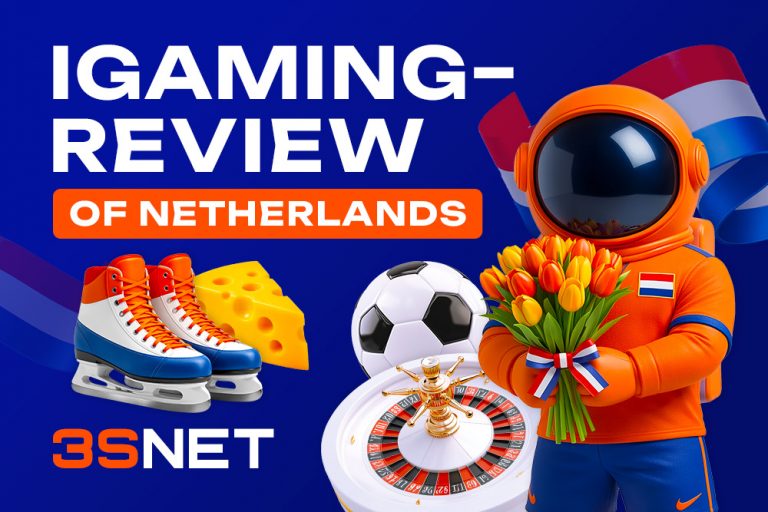
In 2026, the Netherlands is no longer an “easy” GEO but a mature, strictly regulated yet still lucrative market where online gambling continues to grow despite tightening regulations.
This content serves informational purposes only. We do not endorse violations of local laws or service policies. Please familiarize yourself with local regulations and comply accordingly!
According to data from the regulator Kansspelautoriteit (KSA)*, the total gross gaming revenue (GGR) of the Dutch market reached approximately €4 billion in 2023, showing growth of over 20% compared to 2022. The online segment alone grew by about 8% just during the first half of 2024, reaching roughly €752 million in GGR and continuing to take market share away from land-based casinos and betting halls. At the same time, online gambling remains relatively young in the Netherlands, as full legalization of online casinos and betting through the KOA law only took place in 2021.
*What is Kansspelautoriteit (KSA) and what role does it play in regulating gambling and betting in the Netherlands? Read on in our 3S.INFO Review.
Why the Netherlands is a Trending iGaming Market
Despite restrictions on advertising, deposit limits, and increased tax burden, the local online sector demonstrates steady growth and provides clear economic returns. According to KSA reports, the GGR of the legitimate online market in 2024 amounted to €1.47 billion, which is approximately 6% higher than the previous year (source: KSA Spring Report 2025). Simultaneously, the number of accounts is growing. According to monitoring data, the number of activated gaming accounts with licensed operators consistently exceeds one million per month, while real active players are estimated at around 450-800 thousand adult residents of the country, or about 5% of the adult population (source: GfK for KSA, 2024). For media buyers, this means that the audience exists, they are financially capable, regularly engage in online games, and have become accustomed to digital financial services, providing opportunities for optimization and collaboration.
An important point often underestimated is the balance between the legal and illegal segments. In its latest reports, KSA openly states that although 90–91% of players are formally registered with licensed operators, the volume of money flowing into the gray area has noticeably increased and may now account for up to 50% of total gaming expenditures, according to certain sources (based on KSA Monitoring Report 2024, analysis by Gambling Insider). This is due to several factors simultaneously: increased taxes on GGR, introduction of strict deposit limits and stricter control over advertising for legal brands. As the official part of the market shrinks under regulatory pressure, demand for gambling doesn’t disappear, leading to a portion of turnover shifting towards areas with less stringent requirements. This isn’t a signal to look for ‘backdoor routes,’ but rather indicates that the Dutch player is becoming more selective and sophisticated. He understands how bonuses work, recognizes the difference between regulated and unregulated offers and quickly spots fakes or inadequate funnels.
Trends in the Netherlands iGaming Market 2026-2027
If we consider trends, the Netherlands serves as a classical example of a market transitioning smoothly from “chaos after legalization” to a managed ecosystem. Altenar’s review highlights that following the opening of the market to private operators under the KOA law, the country went within just a couple of years from being a state monopolist to adopting a multi-operator model similar to other strictly regulated EU jurisdictions (according to Altenar’s data, “Navigating the Legal Landscape of the Gambling Industry in the Netherlands”).
In 2023, the overall GGR from gambling reached approximately €4 billion, with the online segment growing by 8%. The proportion of adult Dutch citizens playing online stabilized at around 5%, with nearly 90% using only licensed websites. For operators, this signals that the market is no longer in a phase of wild growth but is far from saturation, especially considering that mobile iGaming and live formats continue to displace traditional offline casinos.
Now let’s move on to what’s most interesting for affiliates — why can the Netherlands still be considered a promising GEO for delivering traffic to casinos and bookmakers, despite all these regulations.
Firstly, there is the level of income and infrastructure: GDP per capita, developed fintech services, high proportion of cashless payments, and almost complete digitization make the local player an ideal customer for online casinos and betting. Altenar explicitly notes that the Netherlands is a country with a population of more than 17 million people, very high internet penetration, and significant growth in the proportion of those who gamble online, especially via mobile devices.
Secondly, local players respond well to personalization and convenient user experience. Trends for 2024–2026 include live casinos with localized dealers, betting through mobile apps, personalized offers based on AI analytics, and deep live formats, which increase conversion rates and lifetime value when the sales funnel is properly designed. Therefore, if you understand what you’re promoting and don’t operate on the principle of “offering everyone the same bonus preload,” but tailor your creatives and offers to suit the context of the Dutch audience, this GEO can deliver good numbers for EPC and ROI.
From a general dynamics perspective, the current situation resembles a story of “growth amidst tightening.” KSA’s Spring Report 2025 for 2024 presents a paradoxical picture: total GGR for the legal online market increased by 6%, but in the second half of the year, the regulator noted a decrease in average player losses due to new measures aimed at protection and deposit limits. To put it simply, revenues are increasing, the number of players and accounts is rising, but the average check size and levels of extreme losses are decreasing, and it becomes possible to even out the most problematic cases. For a thoughtful affiliate, this is actually beneficial: the regulator cleans up the market from the most toxic scenarios, creating a more stable environment in the long term, where the actual mid-level player stays in the ecosystem longer, and your FTD doesn’t “burn out” over a single weekend.
Legislation and Regulation of Gambling in the Netherlands
In the Netherlands, gambling is currently regulated rigidly and fairly transparently: there is a basic law, a separate act for online activities, and one main regulator responsible both for issuing licenses and cracking down on illegals.
The foundation is provided by the old Law on Betting and Gambling (Wet op de kansspelen, Wok) dating back to 1964, which prohibits offering games of chance without a license and defines what constitutes gambling. In 2021, a key reform was added, the Remote Gambling Act (Wet Kansspelen op afstand, KOA), which came into force on April 1, 2021. It legalized online casinos and online betting under license and introduced additional requirements regarding advertising, player protection, and prevention of addiction. Currently, the operational framework consists of the combination of Wok + KOA along with subordinate acts (such as the Remote Gambling Decree/Regulation, rules on advertising and limits) applicable to both online and offline operators
The primary regulatory body is the Netherlands Gambling Authority, known as Kansspelautoriteit (Ksa), an independent regulator operating under the Gambling Act.
Key functions of Ksa:
- Issues and revokes gambling licenses (both online and land-based);
- Monitors compliance with Wok/KOA laws, advertising restrictions, Responsible Gambling standards and AML/CTF regulations;
- Maintains and administers the national self-exclusion register CRUKS;
- Investigates violations and issues directives, fines, and other measures against operators and intermediaries (payment processors, providers, advertisers).
Some powers are shared with municipalities: local authorities issue permits for slot machine venues, monitor small lotteries, and regulate community events such as “community bingo.”
Who Issues Gambling and Betting Licenses in the Netherlands?
Licenses for remote gambling (online casinos, online betting, etc.) are issued specifically by Kansspelautoriteit. Since the entry into force of the KOA on April 1, 2021, operators submit applications to Ksa, and the market effectively opened on October 1, 2021. Ksa evaluates:
- Reliability and financial stability of the operator;
- Technical platform (RNG, security, storage of data within the EU/European Economic Area);
- Policy on Responsible Gambling, including measures to prevent addiction and integration with CRUKS;
- Compliance with AML/CTF rules under the Wwft (Money Laundering and Terrorist Financing Prevention Act).
Without a Ksa license, an operator cannot legally offer or promote games of chance to residents of the Netherlands.
Who Blocks Illegal Operators in the Netherlands?
Formally, Ksa does not use direct blocking by IP or DNS, but after the legalization of the online market, the regulator gained an additional tool — the authority to issue mandatory directives to payment service providers, ISPs and ad platforms requiring them to cease servicing illegal operators. This allows:
- Ensuring the termination of merchant accounts and payment gateways for unauthorized sites;
- Requiring hosting providers, ISPs, and ad networks to stop serving blacklisted casinos and betting sites;
- Through agreements with app stores (Apple, Google, etc.), ensuring the removal of applications from illegal operators targeting Dutch players or masquerading as licensed brands.
Additionally, Ksa collaborates with the Meld Vals Spel platform, through which users and industry associations report suspicious websites and applications. These cases are then investigated, potentially resulting in service blockades and penalties for operators.
Which Brands of Online Casinos and Bookmakers Operate Legally in the Netherlands?
The main iGaming operators in the Netherlands are licensed brands working under the strict supervision of the regulator Kansspelautoriteit (KSA), along with several major international companies that have adapted their products to comply with local regulations.
A comprehensive list can be found in the Register of Licensees, the public registry of licenses maintained by KSA. Here, you can verify whether a brand, website, or specific license number has been granted permission to conduct online gaming operations in the Netherlands.
Licensed Gambling and Betting Brands in the Netherlands
Based on information from KSA and specialized media outlets, among the operators holding licenses for online gambling are the following brands (always verify the current status in the KSA registry):
- Holland Casino Online (state-owned operator, online casino and betting);
- TOTO Online (brand owned by Nederlandse Loterij, sports betting and casino);
- Bet365 (operating under Hillside entity);
- Bingoal Nederland (Belgian brand, sports betting and casino);
- Tombola (online bingo, part of Flutter group);
- Play North (including Rocket Casino, etc.);
- NSUS / GGPoker.eu (poker room);
- Plus other holders of remote gambling licences (around 30 online licences by 2024).
For an up-to-date list, always refer to the KSA registry, as the market is dynamic: licenses are issued, suspended, and revoked.
Major International Brands in the Market
Among international companies officially operating in the market with local licensing or through local entities, are:
- Bet365: global betting and casino brand, one of the most recognizable operators in Europe;
- Tombola: large British online bingo brand, licensed in the Netherlands;
- Bingoal: Belgian betting and casino operator;
- NSUS / GGPoker: international poker brand with a separate Dutch license.
Many other global and European operators view the Dutch market as promising but must adhere to KSA’s very strict requirements concerning advertising, KYC procedures and player protection.
Local and Semi-Government Companies
Key local players include:
- Holland Casino: state-run operator of physical casinos and the online platform Holland Casino Online;
- Nederlandse Loterij / TOTO Online: national lottery company owning the TOTO brand for betting and online games;
- Janshen-Hahnraths Group / FPO Nederland: Dutch operator of gaming halls that expanded into online offerings.
These companies position themselves as responsible national operators with strong offline presence and prioritizing compliance.
Strengths and Weaknesses of the Market and Brands in the Netherlands
| Strengths | Weaknesses |
| High Trust and Player Protection. Strict requirements of the Remote Gambling Act and oversight by KSA (CRUKS, limits, KYC, ban on cryptocurrencies) make licensed operators reliable and transparent.. | Very Strict Regulation and Penalties. New fine policies implemented by KSA and tightened regulations in 2024–2025 make the market expensive and complex for operators. Mistakes in advertising or duty of care lead to substantial sanctions or license revocation. |
| Strong Brands. The presence of Holland Casino, Nederlandse Loterij/TOTO, and international giants (Bet365, GGPoker, Tombola) ensures a wide range of products and quality platforms. | Limited Marketing. Strict limitations on advertising, bonuses, and targeting reduce opportunities for aggressive growth and complicate affiliate models. |
| Mature Payment and Tech Landscape. Local payment methods, high-speed internet access, advanced mobile products, and robust analytics enable operators to develop personalized and responsible iGaming experiences. | Competition and Margin Pressure. Combination of product restrictions, taxation, and competition from the illegal segment creates margin pressure, particularly for new and niche brands. |
How Much Money Does the Netherlands iGaming Market Make?
In the Netherlands, gambling and betting taxation is strict and detailed. Operators pay high taxes, while the regime for players depends on the type of game and the size of winnings.
In 2024, total tax revenue from gambling in the Netherlands reached approximately €1 billion, setting a record for the market.
For 2025, tax revenues from gambling were projected at around €800 million, against a backdrop of tightened regulation and reduced activity, despite the tax rate increase to 34.2%.
The tax increase to 37.8% from 2026 was projected to generate an additional €200 million annually for the budget. However, analysts and the KSA have already highlighted the risk of a tax gap due to a decline in legal GGR.
General Overview of the Dutch iGaming Market
The iGaming market in the Netherlands is regarded as mature, heavily regulated, and one of the most responsible in Europe. It evolved from a long history of state-controlled gambling and received its fully legal online form only in 2021.
A Brief History of Gambling in the Netherlands
- The earliest forms of organized gambling were established with the creation of the state lottery, Staatsloterij, in 1726. It remains operational to this day and is considered one of the oldest lotteries in the world.
- The modern regulatory system was shaped by the 1964 Betting and Gaming Act (Wet op de Kansspelen), which established state control and a limited licensing model.
- In the 1970s, Holland Casino was launched as the state-owned operator of a land-based casino network, effectively establishing a state monopoly on casinos.
- In 2012, the regulator Kansspelautoriteit (KSA) was established. In 2021, the Remote Gambling Act (KOA) came into force, and starting October 1, 2021, the first licensed online casinos and bookmakers began operating. Since then, the market has developed under a framework of strict licensing, responsible gaming and high taxes on GGR.
The Netherlands is a small, densely populated country in Western Europe, located on the coast of the North Sea. It shares borders with Germany and Belgium and is historically integrated into the EU market.
Population: Approximately 17.5–18 million people. The country is among the most densely populated in Europe, with a population comparable to, for example, Romania or Chile, but significantly smaller than Germany or France.
Major cities: Amsterdam (approximately 900,000 within city limits and over 2.5 million in the metropolitan area), Rotterdam (about 650,000), The Hague (roughly 550,000), Utrecht (approximately 360,000).
Official Language: Dutch. English: The proportion of the population with a strong command of English is estimated to exceed 90%. The Netherlands consistently ranks among the top three countries globally for proficiency in English as a foreign language.
Currency: Euro (EUR).
For iGaming, this translates to a comparatively small but affluent market with a high concentration of population in several agglomerations, an audience that is nearly entirely English-speaking, and a unified European currency.
Internet: Fixed and mobile internet penetration is extremely high, with network usage estimated at 95–98% of the adult population. Broadband and mobile 4G/5G coverage spans virtually the entire territory. Smartphones are owned by the vast majority of residents, with estimates ranging from 85–90%+ for adults.
For iGaming, this implies that the primary channel is mobile (apps and responsive web), while players are accustomed to high-quality digital services, fast payments and rigorous data protection.
Characteristics of the Gambling Target Audience in the Netherlands
The iGaming audience in the Netherlands is young, digital, and strongly “mobile-oriented”: online casinos dominate in terms of revenue, but sports betting is rapidly gaining ground, particularly among younger demographics.
Who Gambles in the Netherlands?
According to market research studies, around 5–6% of the country’s adult population participates in legal online gambling (approximately 800–900 thousand individuals), with the total number of online players exceeding 1 million and continuing to grow.
Age Structure:
- 18–23 years: About 20–23% of the online audience; heavy users in terms of engagement but lower average losses compared to older players.
- 24–40 years: The largest segment (~45% of players); diverse interests including casinos, live games, and sports betting.
- 41+: Approximately 35%; higher proportion of interest in lotteries, scratch cards and more traditional forms of gambling.
By gender, the market skews towards men, particularly in sports betting, though women’s participation in online casinos is noticeable and growing.
Financial profile: Working adults with regular incomes dominate; younger adults aged 18–24 tend to play more frequently but spend less in absolute terms, whereas the 24–40 age group generates the highest revenue.
Engagement Factors and Habits of Casino and Bookmaker Audiences
The average player uses about 2–3 websites per month; most stick to 1–2 brands, but approximately 20% of users concurrently play on 4+ platforms.
Main Triggers:
- Mobile-friendly interface, quick login, simple registration process.
- Gentle but visible personalization (game selection, offers) without aggressive push, due to strict regulation of advertising.
- Honesty and safety (KSA license, clear limits, fast payouts).
Effective Approaches:
- Mobile-first UX, precise localization into Dutch and high-quality support.
- Soft gamification, missions, leaderboards and jackpots in casinos.
- For sports betting: a combination of live lines, easy-to-use bet builders and localized content (Eredivisie, national team, cycling, etc.).
Popular Games in the Netherlands: Casinos and Top Slots
According to market data, online casinos generate approximately 70–75% of GGR, while sports betting accounts for roughly 20–25%.
The greatest interest is drawn to high-volatility video slots with bonus rounds, live casino games (roulette, blackjack, game shows), and fast games with short sessions.
Among top slots, most operators feature international hits from major providers (NetEnt, Pragmatic Play, Play’n GO, etc.). However, the specific titles available depend on the operator’s licensing agreements and are subject to change, so it’s always necessary to check the current offerings on platforms like Holland Casino Online, TOTO and other brands.
Which Sports Do They Bet On?
- Football is the absolute number one: Eredivisie (Ajax, PSV, Feyenoord, AZ Alkmaar), international tournaments (Champions League, Europa League, European Championships, World Cup).
- Tennis: ATP/WTA Tour, Grand Slams.
- American sports: to a lesser extent (NFL, NBA, MLB), but this is more of a niche.
- Cycling, Formula One (especially after the success of Max Verstappen), motorsport.
- Well-known teams and athletes central to marketing efforts:
- Clubs: Ajax, PSV, Feyenoord;
- The Netherlands national football team (Oranje);
- Max Verstappen (F1); leading Dutch cyclists in the Tour de France and the classics.
Esports remains a niche but steadily growing segment:
- Young adults aged 18–24 show greater interest in esports and betting on titles like CS2, League of Legends, Dota 2, FIFA/EA FC.
- While esports currently accounts for a significantly smaller share of total turnover compared to traditional sports and casino games, operators are including it in their product offerings as part of a youth-focused strategy.
Payment Solutions and the Importance of Localization in the Netherlands
In a country with near-complete banking and digital coverage, players expect instant and secure payments. Any friction during deposit or withdrawal processes leads to churn towards competitors or the unlicensed market.
Popular Payment Methods for Casino and Betting Sites in the Netherlands
Local and Banking Methods:
- Online banking and SEPA transfers via major banks (ING, ABN AMRO, Rabobank);
- Local instant payment solutions / payment gateways integrated with internet banking.
International Methods:
- Major card schemes (Visa/Mastercard);
- Popular e-wallets and fintech services (PayPal, Skrill, Neteller, etc., where permitted for specific use cases).
Cryptocurrencies are generally not directly accepted by licensed operators due to regulatory restrictions and KSA requirements. Using crypto for betting with offshore brands remains outside the legal framework and is not recommended from a compliance perspective.
Recommendations for Affiliate Marketing Specialists
- Ensure stable operation of all key local payment methods (online banking, cards);
- Clearly communicate withdrawal speeds and terms;
- For affiliates: avoid promoting unlicensed crypto casinos to Dutch traffic to prevent sanctions and conflicts with partner policies and the regulator.
Traffic and Marketing for Gambling and Betting in the Netherlands
iGaming traffic from the Netherlands is intriguing because it represents a mature, high-value, yet heavily regulated GEO. Here, you cannot simply “direct traffic indiscriminately,” but with the right strategy, it’s possible to generate stable revenue from quality traffic and long-term, high-LTV users.
Why You Can Generate Revenue from Netherlands GEO Traffic?
The market is licensed and heavily restricted in terms of the number of operators, but demand for online casinos and betting remains consistently high, with part of the audience turning to unlicensed sites. This creates a niche for affiliates who can:
- Clearly explain the difference between licensed (“white”) and unlicensed (“gray”) sites;
- Drive valuable, solvent players to the licensed segment.
For affiliates, the following approaches remain effective:
- Branded traffic (reviews of Holland Casino, TOTO, Bet365, etc.);
- Niche portals (strategy guides, Responsible Gambling resources);
- Community-based approaches (chats, forums, Discord/Telegram groups for bettors).
CPA, RevShare, Exclusives
- CPA models are typically stricter regarding quality: affiliates are expected to deliver verified registrations + deposits that meet KYC requirements.
- RevShare with licensed operators may be moderate (due to high taxes and retention challenges), but it can generate a long tail through stable gameplay and high ARPU.
- Exclusive offers (enhanced CPA/RevShare, hybrid schemes, unique bonuses tailored for the NL market) are available to affiliates with consistently high-quality traffic and a solid understanding of compliance.
Entry and Growth Opportunities in Dutch iGaming
- The tougher market conditions push out players who can’t operate legally. For those willing to follow the rules (content-driven approach, SEO, Responsible Gambling), this represents an opportunity to fill vacated niches.
- Both regulators and operators actively combat illegal activity. As the gray market comes under greater pressure, high-quality “white” traffic brought in by affiliates becomes increasingly valuable for brand operators.
Promising Directions for the Next 3 Years
- Content portals and comparisons of licensed operators (rankings, reviews, guides on limits and Responsible Gambling).
- Niche websites focused on specific games/sports (e.g., dedicated to poker, the Eredivisie only, or F1/Verstappen).
- Community-based approach: private chat groups for strategies, predictions, and statistics, monetized through affiliate programs and subscriptions.
Marketing for Gambling and Betting in the Netherlands
Practical Cases for Gambling and Betting in the Netherlands
Checklist for Launching Traffic for NL Gambling/Betting
1. Legal Status and Compliance
- Understand which operators hold an NL license and are open to working with affiliates.
- Review advertising and content requirements (KSA, specific brand policies).
2. Analytics and Strategy
- Define your niche: casino, sports, poker, esports, operator reviews, or responsible gambling.
- Choose the format: SEO portal, blog, social media, community.
3. Technical Foundation
- Reliable tracker, anti-fraud measures, integration with affiliate networks.
- Fast and responsive website with proper localization into Dutch.
4. Content and Creatives
- Prepare unique operator reviews, guides, FAQs, instructions on payments and limits.
- Include sections on risks, limits, and addiction help. This builds trust and aligns with regulator expectations.
5. Testing and Scaling
- Launch with small volumes across several offers, closely monitoring CR, KYC, LTV.
- Eliminate sources of toxic traffic (chargebacks, self-exclusion) and scale up high-quality channels.
This approach helps build a sustainable, compliant, and profitable traffic stream for the Netherlands GEO over the long term, moving beyond just a short-term push.
The Netherlands is an excellent example of what a mature European market looks like after several years of intensive regulatory oversight. On one hand, you face intense competition, a high barrier to entry, and strict rules of the game. On the other hand, there is a relatively clear regulatory framework, a predictable regulator (the KSA regularly publishes market scans and reports), and easily discernible data on GGR, the share of online players, and audience behavior. This allows operators to calculate unit economics more accurately, and affiliates to build funnels and set KPIs based not on gut feeling, but on data. You know what percentage of adults actually gamble, how much younger audiences typically lose on average, how many accounts an average player holds, and you can estimate in advance where your ceiling is and where your growth potential lies.
It’s also worth highlighting why the Netherlands remains crucial specifically for those driving traffic to licensed casinos and bookmakers, rather than chasing fleeting hype in the chaotic gray market. Official statistics show that, despite growth in the unlicensed sector, the overwhelming majority of players still choose licensed platforms. 91% of registered users are on legal projects. For an operator, this is a strong argument for focusing on licensable products instead of venturing into the “underground.” For an affiliate, it’s a clear signal that building long-term partnerships with white-label operators is more profitable than resetting one’s reputation with each campaign. When a GEO operates by strict rules, brand capital and user trust become more valuable than any clever short-term scheme.
To put it simply, the Netherlands in 2026 and 2027 is a market where those who can play the long game will win — those who keep regulations in mind and look at numbers beyond just the first-time deposit (FTD). Chasing a “fairy-tale eCPC” at any cost is pointless here: the regulator will inevitably catch up with those who engage in blatantly illegal schemes, and operators are getting better at filtering out poor-quality traffic. Instead, it makes sense to invest in legitimate traffic sources, quality pre-sell, localized content, mobile UX, and retention strategies. This is precisely what aligns with market trends and allows you to stay in the game while the regulator and KSA continue to tighten the screws — even as the online segment continues to grow.
This is precisely why a review of the Netherlands is essential for the entire iGaming community. It demonstrates what a mature, regulated European market looks like, one that remains profitable and continues to grow. For an operator, it offers insights on how to structure products, bonus policies, and communication with regulators to avoid becoming part of the “failed brands” statistics. For an affiliate, it serves as a map showing that there is a solvent, active audience, strong competition, and clear rules within which a sustainable business can still be built. If you think in terms of LTV, traffic quality, and long-term partnerships, rather than just chasing a “quick win” on one or two offers. Ultimately, the Netherlands remains a trending market not because it offers “easy money,” but because it is one of the best proving grounds for learning to operate under genuine, mature iGaming regulation while still generating revenue.
FAQ
Why are the Netherlands considered a trendy but challenging iGaming market?
As of 2026, the Netherlands represent a mature, highly-regulated GEO with a high GGR of approximately €4 billion in 2023 and a growing online segment that already exceeds €1.47 billion annually. Although not overheated like classic Tier 1 markets, the Dutch market combines high player purchasing power, strong regulation, and considerable potential for further growth, particularly in mobile iGaming and live formats.
How is regulation structured and what is KSA?
Gambling is regulated by a combination of the old Wok law (1964) and the KOA (Remote Gambling Act), which legalized online casinos and betting with proper licensing starting in 2021. The main regulator is Kansspelautoriteit (KSA). It issues licenses, oversees advertising and responsible gambling practices, maintains the self-exclusion register CRUKS, and cracks down on illegal operators through payment services, providers, and advertising platforms.
Which brands operate legally online in the Netherlands?
Legal operators must hold a KSA license, and the full list is available in the public Register of Licensees on the regulator’s website. Key brands include Holland Casino Online, TOTO Online (Nederlandse Loterij), Bet365, Bingoal, Tombola, Play North (Rocket Casino), NSUS/GGPoker, and other holders of remote gambling licenses (around 30 online licenses by 2024).
Why is traffic from the Netherlands still profitable for affiliates?
The online market provides a stable growth in GGR of about +6-8% per year, with the number of active accounts at licensed operators exceeding 1 million. However, the actual number of players is estimated to be between 450,000 and 800,000 adults, which represents approximately 5% of the population. With high purchasing power, digital familiarity, and advanced fintech services, this creates a solid foundation for CPA/RevShare models, especially for those affiliates who operate within legal boundaries and can effectively explain the benefits of licensed sites amidst the growing gray segment.
What are the main strengths and weaknesses of the Dutch iGaming market?
Strengths include a high level of trust in licensed operators, strong player protections (CRUKS, limits, KYC), robust local and international brands, and a mature payment infrastructure. Weaknesses encompass high GGR taxes (up to 37.8% from 2026, including fees), strict advertising restrictions, margin pressure, and growth in the unlicensed sector’s share. This raises the bar for product and marketing quality while filtering out those who are not in it for the long haul.

Share it with your friends via favorite social media
Similar posts

Belgium iGaming Overview: Regulation, Audience, Trends
If you look at Europe through the eyes of a media buyer, Belgium definitely stands ...