
Publication date: 20 January 2026
If you’ve been in the media buying space for a while and work with gambling or betting, you’re likely familiar with the term fantasy sports. Some consider it a form of ‘soft betting,’ others see it as a gray area between money games and entertainment, while some underestimate its potential altogether. And they shouldn’t. Fantasy sports is an enormous market, particularly thriving in the US, Canada, India, Brazil, and Europe, where it’s been operating by its own set of rules for years now, generating billions of dollars annually (source).
3S.INFO takes a calm and mature look: what fantasy sports really is, how it works and how it differs from sports betting, why regulators view it differently, and, most importantly, why affiliates and operators should start paying attention to this niche right now.
Fantasy Sports in Simple Terms
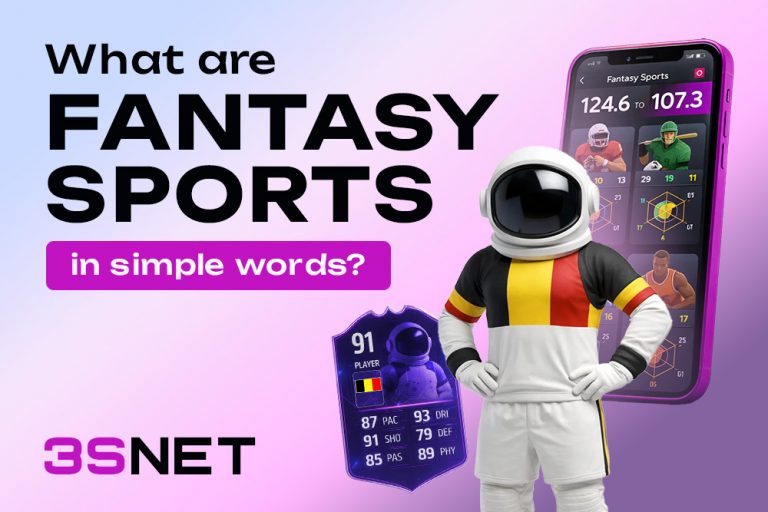
What are fantasy sports? It’s a format of games where users create virtual teams consisting of real athletes (footballers, basketball players, esports competitors, etc.). The outcome depends on how these players perform in actual matches.
How Do Fantasy Sports Work?
The core logic behind fantasy sports always remains the same:
- Sport Selection: Choose your sport — be it football, basketball, hockey, baseball, cricket, UFC, esports — the possibilities are almost endless.
- Team Formation: Users receive a virtual budget to select their team members. Top stars cost more, role players come cheaper.
- Scoring System: Points are awarded based on real-life actions such as goals, assists, saves, rebounds, kills (in esports).
- Competition: Players can compete against each other through various formats like head-to-head matchups, tournaments, leagues, or guaranteed prize pools.
- Prize Distribution: Winners are determined by total points scored, with payouts distributed among top performers.
How to Play Fantasy Sports?
You don’t bet directly on event outcomes like at a bookmaker’s office. Instead, you act as a manager:
— Select your team composition;
— Allocate your budget wisely;
— Analyze player performance;
— Consider opponents, schedules, injuries.
Then watch as your team earns points according to a predetermined scoring system.
A key feature of fantasy sports is that skill matters more than luck. This distinction leads many countries to classify them not as gambling but as skill-based games, significantly impacting regulation.
History and Evolution of Fantasy Sports: From Office Leagues to Billion-Dollar Industry
Fantasy sports emerged long before mobile apps and CPA offers. The first formats originated in the U.S. back in the 60s-70s when American football and baseball fans formed leagues manually using newspapers to track statistics.
With the advent of the internet, everything accelerated rapidly:
- Online leagues emerged.
- Automatic score calculation was introduced.
- Global tournaments became possible.
- Real cash prizes were offered.
In the 2010s, Daily Fantasy Sports (DFS) revolutionized the market. These formats allow participation in one-day or single-match tournaments without committing to a full season. DFS made fantasy sports resemble betting in terms of dynamics but without direct wagers on outcomes.
Fantasy Sports vs Betting: What’s the Fundamental Difference?
At first glance, everything seems similar — sport, money, competition. But if you dig deeper, the differences are fundamental.
| Betting | Fantasy sports |
| Stake placed on the outcome | No direct stake on an event |
| Dominance of randomness element | Outcome relies heavily on analytics |
| Odds set by the bookmaker | User competes against other players |
| Operator’s margin built-in beforehand | Operator profits from commissions |
That’s why in many countries, fantasy sports:
- Are legal even where betting is prohibited.
- Regulated separately.
- Accessible to a broader audience.
What’s the Difference Between Fantasy Sports and Esports?
Fantasy sports and esports are fundamentally different universes united only by the word “sports” and digital environment.
- Fantasy Sports: A strategic game and management simulation based on the results of real-world athletes in actual sports (like football, basketball, etc.).
- Esports: Competitions within video games where professional gamers (esportsmen) compete against each other inside a virtual environment (such as Dota 2, Counter-Strike, League of Legends, etc.).
Why Is Fantasy Sports Not Just an Addition, but a Separate Vertical?
Fantasy sports have evolved beyond being mere fan entertainment. It has become a fully-fledged industry with:
- Its own regulatory frameworks;
- Billions in revenue;
- Loyal and financially capable audiences.
For affiliates, this presents opportunities to:
- Diversify traffic sources;
- Enter new GEOs;
- Reduce dependence on traditional betting.
Why Are Fantasy Sports Interesting for Affiliates?
From a media buyer perspective, fantasy sports offer:
- High LTV;
- Loyal user base;
- Fewer bans from platforms;
- Softer advertising requirements.
Fantasy sports CPA offers often pair well with:
- RevShare models;
- Hybrid payment structures;
- Long-term player lifecycle.
Additionally, in certain regions, fantasy sports can be promoted where betting is formally restricted, utilizing careful phrasing and emphasizing the skill-based mechanics.
What Risks and Limitations Exist When Promoting Fantasy Sports?
Yes, fantasy sports isn’t a silver bullet. There are nuances:
- High competition in top-tier GEOs;
- Product complexity for beginners;
- Dependence on sports seasons.
However, with proper funnel optimization and content strategy, these risks can be effectively mitigated.
Driving Traffic to Fantasy Sports: Targeting, GEOs, Formats
Traffic for fantasy sports is a specific yet highly promising niche. Users are engaged, have high LTV (Lifetime Value), and are frequently willing to spend money.
Who Plays Fantasy Sports: Audience Characteristics
Fantasy sports aren’t casual players. On average:
- Age range: 25–45 years old;
- Above-average income;
- Fans of specific sports (NFL, NBA, Premier League, NHL, MLB, KHL, etc.);
- Enthusiasts of statistics, analysis, participants in betting (sports betting), players of strategy games (chess, poker), pop culture geeks (similar engagement seen in Dungeons & Dragons or video games).
This audience is perfect for upselling:
- Betting services
- Subscriptions
- Analytics tools
- Premium content
That’s why fantasy sports are often used as an entry-level funnel into classic iGaming.
Main Formats of Fantasy Sports
Key Markets for Fantasy Sports
Fantasy Sports Marketing: What Actually Works?
Paid Channels (Performance & Branding)
Social Media
- Facebook*/Instagram*: Ideal for lookalike audiences (based on registered users), targeting interests (sports, teams). Formats include explanatory videos, carousel promotions featuring dream teams, and user-generated reviews.
- TikTok/Reels/YouTube Shorts: Short, dynamic videos like “Weekly Quarterback Picks,” “Beginner Mistakes,” memes about “When Your Forward Missed.” Engages younger audiences.
- Twitter (X): Direct communication with fans, announcements of deadlines, player transfers. Collaboration with micro-bloggers and analysts is possible.
*Social networks Facebook and Instagram are blocked in Russia by court order.
Search Engine Marketing (Google Ads)
- Brand Queries: Name of your app/site.
- High Intent Keywords: [“fantasy Premier League”], [“best picks for NBA fantasy”], [“how to play fantasy football”].
- Contextual Display Advertising: On sports news websites.
Direct Affiliate Program (KPI CPA): Collaborating with relevant influencers (sports bloggers, analysts) on RevShare or fixed payments. Effective for building trust.
Niche Platforms and Communities
- Reddit: Promotion in subreddits like r/fantasyfootball, r/FantasyPL. Important: avoid spamming, focus on providing value.
- Telegram/Discord: Channels and chats dedicated to specific sports. Possible collaboration with admins.
- Webmasters and Affiliate Networks: Widget placement, reviews, pre-landing pages on sports-related sites.
Free Channels (Content & Community)
SEO and Content Marketing
- Blog: Guides for beginners, weekly tour reviews, forecasts, statistical analyses, interviews with top players.
- YouTube Channel: Strategy breakdowns, gaming week reviews, live streams of team creation.
- Tools: Free draft simulators, rating calculators — attractive and engaging.
Community and UGC
- Launching hashtags on social media (#MyFantasyTeam).
- Competitions for the best team, predictions with prizes.
- Leagues for bloggers/influencers.
Partnerships
- With popular sports media outlets.
- With sportswear brands, match streaming services.
Specific Creatives and Mechanics
- Emphasize Skill over Gambling: Showcase victories relying on knowledge, not luck. Use images of strategists and analysts.
- Social Proof and FOMO: Campaigns like “15 colleagues already joined a league. Are you out?” or “Join the office league.”
- Simple Onboarding: Creatives explaining how to start in 30 seconds: “Choose 5 players. Follow matches. Win.”
- Seasonality: Peak traffic occurs before seasons and drafts. Launch campaigns 2-4 weeks prior to start dates.
- Gamification in Ads: Mini-quizzes (“Messi or Ronaldo?”), interactive creatives.
Traffic for Fantasy Sports: Checklist for Getting Started
- Define: Sport, GEO, budget.
- Research: Competitors and their creative ads (spoiler alert: lots of videos with real people).
- Set Up: Tracking pixels and event analytics (registration, first deposit, league creation).
- Create: Segmented pre-landing pages (for beginners/experienced) and ad creative sequences.
- Test: Multiple formats (video, stories, carousels), multiple offers (signup bonuses, free entry to leagues with prizes).
- Optimize: Based on CPA (cost per action) and LTV, eliminating non-targeted audiences.
The main secret: Your audience is not just athletes, they’re strategists and fans. Speak their language: numbers, tactics, emotions from sports and victory.
Fantasy is the perfect format for long-form content, guides, strategies, and player comparisons. There’s no need to aggressively push deposits since users inherently understand the product’s value.
If you view iGaming beyond just casinos and betting shops, fantasy sports is definitely a direction worth keeping an eye on. Most likely, in a couple of years, it will become just as essential in any media plan as slots or live betting.
FAQ
What are fantasy sports in simple words?
Fantasy sports is a type of game where you build a virtual team of real athletes (football, basketball, cricket, esports, etc.) and your success depends on how those players actually perform in real matches. You’re not betting on team wins or totals. Instead, you act as a manager: selecting players within a budget limit, analyzing stats, considering player form and schedules. Then, points are awarded based on real-life achievements like goals, assists, saves, kills, etc. Essentially, it’s “gamified sports analytics” where skill and understanding of data matter more than guessing outcomes with a single click.
What differentiates fantasy sports from traditional betting?
On the surface, it looks similar: sports, money, competition, prizes. But the underlying logic is different.In betting, you wager on the outcome of an event using odds set by a bookmaker, and you’re playing against the house’s margin. In fantasy sports, you don’t place a direct bet on a match result. Instead, you compete against other players based on how well you’ve assembled and optimized your team’s lineup. The operator earns money through entry fees, commissions, and a rake (a percentage of the prize pool), not from a pre-set margin on the odds. This key distinction is why in many countries fantasy sports are legally classified as skill-based games rather than games of chance (gambling). This often makes them legal in jurisdictions where traditional sports betting is prohibited or heavily restricted.
Why is fantasy sports considered a standalone vertical, not just an "add-on to betting"?
Fantasy sports has long had its own market, its own products, and its own giants. In the US and Canada, public companies like DraftKings and FanDuel operate in this space. In India, there’s Dream11. In Europe and Latin America, dedicated platforms for football and esports are being built around annual and daily formats. This vertical boasts its own distinct economics (commissions from prize pools, tournaments, seasonal leagues, DFS), its own regulatory models (often falling outside traditional gambling laws), and its own demographic — a solvent audience aged 25–45 who are passionate about sports and analytics. For affiliates, this already represents a separate layer in the media plan: unique offers, unique creatives, unique seasonality patterns, and distinct content strategies. It’s far more than just “another tab in a betting site.”
Why are fantasy sports attractive for affiliates and media buyers?
From a media buying standpoint, fantasy sports offer several advantages: higher LTV due to repeated participation in competitions, loyal audiences, softer advertising regulations, and fewer platform bans compared to traditional betting. CPA offers related to fantasy sports often come bundled with RevShare or hybrid models, extending player retention via seasonal and daily formats tied to regular deposits corresponding to matches and tournaments. Additionally, in certain regions, fantasy sports can be promoted where direct betting is heavily restricted, focusing on skills, analytics, and sports statistics rather than pure gambling.
What risks and limitations do fantasy sports have as a vertical?
Despite all its benefits, fantasy sports isn’t a magical green corridor. In top GEOs, competition is fierce. The U.S., India, and large football markets are dominated by strong players, making entry difficult without a solid product and marketing strategy. The product is more complex for newcomers than a typical betting slip: you must explain the mechanics, showcase the value of analytics, and avoid overwhelming users with excessive statistics. Moreover, the vertical heavily depends on sports seasons and calendars (cricket, football, NFL, esports) and requires thoughtful content and seasonal funnels during off-season periods to prevent performance drops.
Share it with your friends via favorite social media