
Publication date: 17 December 2025
Modern affiliate platforms are not just reports but powerful growth tools responsible for attribution, analytics, automation, and fraud protection. In 2025, the key market requirements are full data transparency, readiness for a cookie-free future, as well as speed and adaptability of integrations. On 3S.INFO you will find the creation story of the Affise platform: from its revolutionary idea and groundbreaking features through combating fraud to innovations in mobile attribution.
- What is Affise? It’s a cloud-based SaaS platform for affiliate and performance marketing that combines tracking, analytics, affiliate management, payments, and mobile attribution into one interface.
– How did the Affise platform emerge and what pain points in the market were you addressing back then? Which of these issues remain relevant today?
When Affise first appeared on the market, there were solutions offering payment per click (such as HasOffers, Tune, Everflow). However, Affise introduced a fundamentally new approach by providing payment only for conversions with unlimited clicks. This allowed clients to stop worrying about clicks and work with traffic sources that had previously been unprofitable on other platforms. Another challenge was migration and working with offers from different platforms. Thanks to the revolutionary concept of CPAPI, which automatically transfers and updates an unlimited number of offers from over 50 platforms, customers were able to free up resources for other areas of their business while reducing errors in offer setup.
- Want to know more? On the 3S.INFO iGaming Heroes episode, there’s an exclusive interview with Stanislav Litvinov, founder and CEO of Affise. Find out what’s driving one of the most influential players in the industry.
– Who gets the highest ROI using your product? Provide a case without diving deep into analytics: context (client type/stack/GEO) → actions taken within the product → result (numbers, timeframes).
Our platform is designed to cater to various types of clients. Due to its modularity, we can enable or disable specific functionalities depending on the client’s needs. For example, our client 4.partners, who works with mobile applications (subscription model), achieved their ambitious goal of acquiring 200,000 installs per month within six months thanks to utilizing the Data Fusion feature (real-time export of click and conversion data to the cloud) and automations. You can read more about this case here.
– What approach or principle systematically distinguishes you from competitors?
Our principle is flexibility through APIs and automation. We’re not a closed box solution, but rather a platform that can be integrated into the client’s ecosystem. For instance, one global network directly integrated Affise with their CRM and internal billing system. This enabled them to reduce time-to-invoice by 60% and accelerate the launch of new offers in markets — from weeks down to 1–2 days.
– Attribution in the age of privacy: what compromises have you consciously made (first-party/server-side, attribution windows, external ids) and why?
In the era of privacy, we’ve developed a solution that allows users to work seamlessly across all browser types and devices while effectively tracking conversions. Specifically, we’re talking about browsers like Safari, which do not support third-party cookies. To address tracking challenges in such environments, we’ve created a Web SDK solution. This tool enables attributing conversions to affiliates by circumventing restrictions on third-party cookies via probabilistic attribution methods. While it’s not as precise as deterministic attribution, it ensures complete tracking capability even in browsers that don’t support third-party cookies.
– Anti-fraud: what signals/thresholds do you use (click/lead/install), what reactions do you apply (auto-block, hold, alerts), how do you minimize false positives and does appeal process exist?
We operate with screening at the level of conversions (clicks, installs). Our in-house system allows setting presets for checks tailored to different types of clients (e-commerce, lead generation, mobile) and analyzes conversions based on multiple parameters such as device, session duration, IP, referrer, affiliate, sub-ID, among others. Clients have the ability to configure hold times, conversion statuses (pending, processing, confirmed, rejected), and click lifetimes (conversions). Our anti-fraud system continuously evolves, improving check accuracy and reducing false-positive rates.
– Mobile analytics: How do you cover SKAN/ASA, web-to-app, (deferred) deep linking, MMP integrations, in-app events, and anti-fraud for install feed?
In the iGaming vertical, the client faced a significant issue due to having numerous similar sources, landing pages, and campaigns. Without detailed analytics, this situation was quite confusing: it was difficult to determine which creatives and affiliates truly drove revenue. Affise iGaming Performance Insights provided a complete breakdown by EPC and uEPC, enabling the identification of the most effective combinations for each creative and affiliate.
After optimization, the client reduced spending on underperforming campaigns, strengthened top-performing ones, and achieved a profit increase of 25-30% within just one month. Over the quarter, Net Gaming Revenue grew by 20-22%. Now, the team has a complete overview of every source and creative, making the solution their trusted reference point for budget planning.
– Onboarding: Where does entry most often fail and what changes did you make to reduce time-to-value?
Product entry often breaks down during onboarding for the following reasons:
- Incompetence and lack of cooperation from the client’s team, which makes training and customizing the platform to the client’s needs difficult. If there is prior experience with other platforms, negative interference and resistance can also occur, where the client rejects the fact that a particular use case is implemented differently in Affise, even though it ultimately solves the business problem.
- Failed integration tests (primarily with pixel integration). Success here also depends on the experience of the client’s team, their technical foundation, and the behavior of their website and browsers.
- Absence of functionality (and an alternative workaround) that is critically important for the client’s business.
To reduce time-to-value (our trial-to-paying CR has grown from 40% to 50% over two years, by the way), we take the following steps:
- Continuous improvement and expansion of training materials and guides.
- Ongoing upskilling of the onboarding team. All onboarding managers have extensive experience with the product and broad exposure to client cases, verticals, GEOs, etc. This includes not only technical expertise but also business acumen, allowing us to highly customize the onboarding process for each client and their specific business.
- Constant collection, prioritization, and implementation of client feature requests. We help not only current and loyal high-value clients by developing features for them but also new clients when their requests align with our mutual vision for product development.
- We gather and refine market expertise far beyond our own product. To convey value at the earliest stage of product implementation, we understand how similar products work, as well as the products Affise integrates with, adjacent products (CRMs, SMTP-server providers, domain providers), and everything involved in working with clients.
For example, to improve pixel integrations, we developed a Web SDK alongside the standard JS pixel. This gives clients more independence from browser cookie storage and makes integrations more stable. Thus, we provide support even in cases where the setup process is not entirely under our control. This entire set of measures, along with many other accompanying processes, helps us increase the speed and quality of delivering our product’s value.
– The most non-trivial client request: How did you solve it, and did it become part of the core functionality? (If you refused, why?)
In terms of implementation scale, the most non-trivial request was probably for a reconciliation feature with advertisers. This was a rather ambitious task that required bringing report files from advertisers into a unified format for the entire industry to identify discrepancies during the reconciliation process. This functionality is now available to our clients and, to my knowledge, is a unique feature that none of our competitors have yet. A client can upload a file with conversions from an advertiser, and our system automatically calculates and displays the percentage of discrepancies, as well as the specific conversions that differ between Affise and the advertiser’s platform.
– Roadmap for the year: what are you betting on (AI, automation, Web3, etc.) and what are you deliberately avoiding?
We are focusing on several key areas. First and foremost, we aim to make our product as user-friendly as possible for clients in e-commerce and media buying, as we want to attract more of these customers. We are achieving this by creating integrations with popular e-commerce platforms, adapting the interface for specific client segments, and simplifying it. Certainly, like many companies in the market, we want to be a company that leverages all the possibilities of AI. We have already taken the first step in this direction by creating an MCP server for Affise. With it, anyone with access to Claude can make requests to the Affise API. This provides more extensive data than what is available in the interface’s statistics. You can read more about it here.
Finally, we are interested in building a full-fledged ecosystem within Affise, where clients can interact with each other and find affiliates among Affise’s customers. The first step towards this is our Agency Marketplace, which already includes over 80 Affise clients.
– One myth about platforms in your class that you’d like to debunk.
Myth: A tracking platform is simply a “click counter.” In reality, it’s the core of the entire marketing ecosystem: budgets flow through us, along with analytics, automation, and compliance efforts.
Affise Platform: Features and Benefits
| Parameter | Affise Key Features |
| Your customers | CPA Networks, agencies, buying teams, brands |
| Focus: Top 3 Verticals | iGaming, finance, dating |
| Focus: Top 5 GEOs/Regions | CIS, India, Western Europe, Asia, Latin America |
| Tracking | Server-side, JS, postback, webSDK, fingerprinting |
| Cookieless | First-party |
| Anti-Fraud | In-house; third-party vendors: FraudScore, Fraudefence, Adsecurity; control levels: leads/installs |
| Mobile/SDK | Own SDK; integrations with Kochava, AppsFlyer, Adjust; any in-app events |
| Pre-Built Integrations: Top 5 Services/Networks | Google Cloud, Monday CRM, Affilka, Shopee, Salesforce |
| API | 5 RPS limits; bulk endpoints; (documentation) |
| Reports | Real-time; funnels; cross-device; segmentation by custom fields |
| Customization | UI; roles/permissions; business logic |
| Support | TG/Slack/email/WhatsApp; average response time: 30 min – 2 hours |
| Pricing & Trial | Billing model: SaaS; trial period: 14 days; overage policy: a fixed number of events included in the plan, additional events billed separately; migration/import options available |
| Reliability / Compliance | SLA, storage, certifications mentioned; details depend on the selected plan |
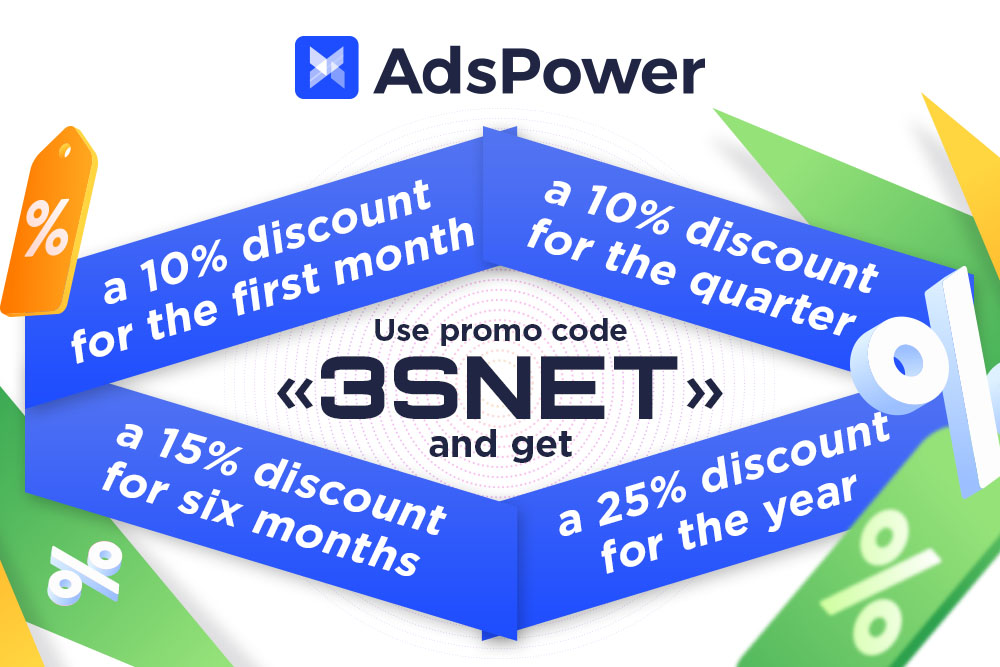
Launching an affiliate program or looking for the best solution for mobile attribution? Save at the start! With the promo code 3SNET from Affise, you get a 7% discount for the first three months of using their high-tech platform for performance and affiliate marketing.
FAQ
What is Affise and what problem does it solve?
Affise is a cloud-based SaaS platform for affiliate and performance marketing that consolidates tracking, analytics, affiliate management, payouts, and mobile attribution into a single interface. It helps launch and scale affiliate programs, automate routine operations, and obtain transparent data on traffic efficiency.
What's the main difference between Affise and classic tracking platforms?
Initially, Affise offered a model with payment only for conversions with unlimited clicks and automatic import of offers through CPAPI, removing traffic limitations and drastically simplifying work with many offers from different networks. Today, the platform’s principle is flexibility through APIs and automation. Affise integrates into the client’s ecosystem (CRM, billing, BI), reducing time-to-invoice and accelerating the launch of new offers.
How does Affise handle attribution and privacy in a cookie-less environment?
The platform supports both server-side and first-party approaches. For browsers with strict policies (like Safari), it uses Web SDK and probabilistic attribution to track conversions without relying on third-party cookies. Although less precise than purely deterministic methods, this approach ensures stable attribution of conversions across nearly all devices and browsers.
What anti-fraud capabilities and mobile analytics does Affise offer?
Affise verifies traffic at the conversion level (click, install), analyzing multiple parameters such as device, IP, session time, referrer, affiliate, sub-ID, etc., with configurable holds, statuses, and click lifetime settings. In the mobile segment, the platform supports SDK, integrations with MMP, web-to-app, deep linking, and provides detailed analytics on EPC/uEPC and sources, allowing weak connections to be disabled and increasing profits for strong campaigns.
How does Affise simplify onboarding and boost clients' ROI?
The platform invests in educational materials, a strong onboarding team, and developing features tailored to real client demands, helping users quickly integrate and realize the value of the product. Practically, this translates into increased conversion rates from trials to paying customers and success case studies where clients achieve hundreds of thousands of monthly installs and double-digit profit growth within a quarter through automation, Data Fusion, and advanced analytics.
Share it with your friends via favorite social media