
Gambling License

Publication date: 10 December 2025

Gambling License: How to Legally Launch an Online Casino, Sportsbook, or Work as an Affiliate

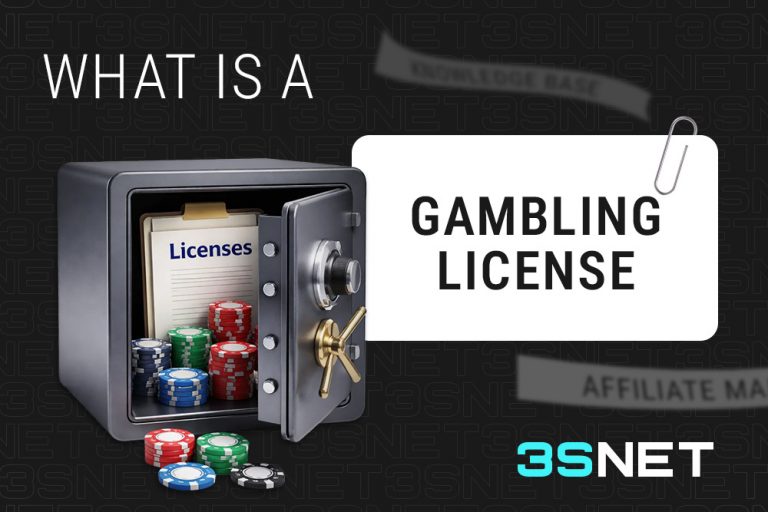
What is a Gambling License? It is an official permit issued by a state regulatory authority for conducting business in the gambling industry. Obtaining a license is a fundamental requirement for the legal operation of an online casino, bookmaker, poker room, as well as for affiliates and CPA partners who promote them. This document confirms the business’s legitimacy, guarantees fair play, and protects players’ rights.

Entering the international iGaming market begins with choosing the right jurisdiction. In this expert guide from 3S.INFO, we will analyze in detail why a gambling license is needed, what types of permits exist for operators and partners, how to choose a suitable jurisdiction, and what the key benefits of legal operation are. This is your ultimate guide to business legalization in the gambling industry.

The information in this guide is based on an analysis of regulations as of 2025-2026. Requirements may change. To obtain up-to-date information and professional support, always consult official sources of regulators.

Why Do You Need a Gambling License? Key Benefits

Having a license gives your business not only legality but also real growth advantages.

Benefit Practical Implications
Legality and Security Protection against blocks, lawsuits, and criminal liability. The ability to legally enter into contracts with software providers and payment systems.
Trust of Players and Partners A license is the primary marker of reliability. It increases conversion, reduces churn, and facilitates attracting traffic from affiliates.
Access to Quality Resources Ability to integrate software from market leaders (NetEnt, Pragmatic Play, Evolution Gaming) and connect reliable payment gateways.
Access to New Markets Legal presence in specific countries and regions, access to advertising channels (Google, social networks) prohibited for unlicensed sites.
Work with Affiliates The ability to legally attract traffic through CPA partners and affiliate networks, which is critically important for scaling.

Types of Licenses: For Operators and Affiliates

Regulatory requirements vary depending on the business model.

1. Operator License

This is a permit for a company directly accepting bets or conducting gambling activities.

  • Online Casino License: Covers slots, table games, roulette, live dealers.
  • Sports Betting License: Allows accepting bets on sports, esports, political, and other events.
  • Poker License: For organizing poker rooms and P2P games.

2. Affiliate License

A separate and critically important type of permit for partners.

  • Who it’s for: CPA partners, webmasters, arbitrageurs, media buyers promoting gambling.
  • Why it’s needed: legalizes receiving commissions for attracted traffic. Without it, activities may be considered aiding illegal gambling with all associated legal risks.
  • Requirements: often includes checks on beneficiaries, adherence to advertising and responsible gaming rules.

Who and When is an Affiliate License Mandatory?

It’s important to understand that such a license is not required in most countries worldwide. It becomes mandatory only in those jurisdictions where the regulator strictly controls the market and requires the identification of all operator partners (including affiliates). It certifies that the partner works only with licensed brands, complies with responsible gaming rules, and local advertising laws.

Checklist: Do You Need a Separate Affiliate License?

A license becomes necessary if you combine several conditions:

  1. You receive remuneration (CPA, RevShare) for attracting players.
  2. You attract traffic from a strictly regulated jurisdiction (e.g., Romania, Greece, certain U.S. states).
  3. Your operator-partner is legally obligated to disclose all its affiliates to the regulator.
  4. You use advertising platforms (Google, Meta*) that in that country require license confirmation for gambling advertising.

If several points apply (especially 2, 3, or 4), you will almost certainly need registration or a license.

Key Countries with Mandatory Affiliate Licensing:

Romania (Class II Licence), Greece (registration with HGC), a number of U.S. states (e.g., New Jersey, Pennsylvania, Michigan), where a vendor license is required. In other major markets, such as the UK, Spain, or Malta, a separate license for an affiliate is not needed, but strict advertising rules apply.

A complete guide to affiliate licenses, including a step-by-step guide on obtaining them in different countries, document requirements, and an up-to-date list of jurisdictions, can be found in our dedicated article: What is an Affiliate License?

How to Choose a Jurisdiction: Comparative Overview of Licenses for Operators

The choice depends on the target audience, budget, and business model. Below are key options with a brief description.

Country / Jurisdiction Who it suits / Key Features Financial Requirements and Taxes Link to Detailed Review
Curacao For startups, international projects. Fast acquisition (2–4 weeks), low requirements. Cannot operate in the USA, France, Netherlands. Cost: ~ €20-25k for a sub-license. Low taxation. Gambling License Curacao
Anjouan For startups, projects for Asia, Africa, Latin America. Fast process (1–1.5 months), single license for different types of activities. Initial fee: $30-35k. Annual renewal: $15-20k. Low taxes. Gambling License Anjouan
Poland For bookmakers focused on the Eastern European market. Sports betting only (online casino is a state monopoly). Requires a Polish legal entity and office. High costs: guarantee deposit 480k PLN, turnover tax 12%, total expenses from 600k PLN. Online Betting License Poland
Germany For operators ready for strict regulation of the large EU market. Strict limits (€1 bet, €1000/month deposit), casino bonus ban. Registration fee: €2.5-5k. License fee: up to €50k. Tax: 5.3% of GGR. Own capital: €5-10m. Gambling License Germany
Estonia For operators targeting the EU. Prestigious license without expiration. Requires an Estonian language interface. High share capital: €1m for a casino. State duty: €51,200. Gambling License Estonia
Slovakia For operators in the EU. Servers must be located in Slovakia, domain .sk. Requires a local representative office. Share capital for an online casino: €1.7m. Fine for operating without a license: up to €1m. Gambling License Slovakia
Slovenia For operators ready for significant investment in the EU. Quota: no more than 45 licenses for gambling halls. Minimum share capital: €416,000. Bank guarantee: 50% of this amount. Gambling License Slovenia
Canada (Ontario) For targeted entry into the regulated Canadian market. Operation only in Ontario province. Mandatory integration with iGaming Ontario. Exact fee and tax amounts are set by the AGCO regulator depending on license type and turnover. Gambling License Canada
Argentina For entering the largest Latin American market. Decentralized regulation (license in each province). Registration fee: $50-150k. Tax on GGR: 5-20%. Total costs: $200-500k (approximately). Gambling License Argentina
Australia For bookmakers focused on betting (online casinos are prohibited). Regulation at the state level, license in each. Registration fee: 5-20k AUD. Annual fee: 10-100k+ AUD. Tax (POCT): 10-20% of GGR. Gambling License Australia
Russia For offline casinos only in 4 special gambling zones. Not applicable for online operators. State duty: 10k RUB. Net assets: at least 600m RUB. High excise taxes on tables and slots. Gambling License for a Casino in Russia

Key Requirements for Obtaining an Operator License

Despite differences, regulators present a common set of strict requirements:

  1. Impeccable Reputation: thorough due diligence of all beneficiaries, shareholders, and directors for the absence of criminal records and connections to crime.
  2. Financial Transparency: confirmation of the legal origin of capital and the company’s financial stability.
  3. Technical Reliability: Certification of gaming software and Random Number Generators (RNG) in accredited laboratories (eCOGRA, iTech Labs, GLI).
  4. AML/KYC Compliance: implementation of anti-money laundering policies and customer verification procedures.
  5. Player Protection: mandatory implementation of responsible gaming tools (deposit limits, self-exclusion, time-outs).

How to Get a Gambling License: Basic Algorithm

  1. Analysis and Selection: determine target markets and choose a suitable jurisdiction based on budget, timelines, and requirements.
  2. Legal Preparation: register a company in the chosen jurisdiction (or in an acceptable EEA country).
  3. Dossier Compilation: prepare a document package: articles of association, proof of beneficial ownership, certificates of no criminal record, business plan, financial statements.
  4. Technical Audit: conduct platform and game content certification with an accredited provider.
  5. Application Submission: pay the registration fee and submit the complete dossier to the regulatory authority.
  6. Interaction with the Regulator: respond to additional inquiries and obtain approval.
  7. Launch: pay the license fee, connect payments, and begin legal operations.

Ready to Start Working with Legal Licensed Brands?

The CPA network 3SNET features exclusive offers from verified bookmakers and online casinos operating under licenses. Choose favorable terms and start driving traffic to reliable projects.

Register with 3SNET and gain access to offers, personal support, and a starting bonus.


FAQ

What is a gambling license and why is it needed?

A gambling license is an official state permit that is essential for operating legally. It’s not just a formality. Without this license, you cannot legally run an online casino or sportsbook, accept payments from players, sign contracts with reputable software providers, or advertise on major platforms like Google. Most importantly, it provides the trust and security that players and business partners require, protecting you from legal repercussions such as website blocks, heavy fines, and potential criminal charges.


Where and how to get an online casino license?

You obtain a license in a specific country or jurisdiction, known for its gambling regulations, such as Curacao, Malta, or Germany. The difficulty varies significantly. For example, getting a license in Curacao is relatively straightforward and fast, often taking just a few weeks with minimal requirements. In contrast, securing a license for a strictly regulated market like Germany is a complex, lengthy, and expensive process involving detailed checks on your company’s finances, ownership, and technical systems. The basic steps always involve choosing a jurisdiction, registering a local company, preparing a comprehensive application dossier, and undergoing a review by the regulator, a process best handled with expert legal support.


How much does a gambling license cost?

The total cost of a gambling license consists of several components: initial government application fees, annual license renewal fees, taxes on your revenue (like a percentage of GGR), and the substantial cost of professional services from lawyers and compliance experts. In affordable jurisdictions like Curacao or Anjouan, the total first-year cost might start from around 25,000 – 35,000 euros. For a major regulated market like Germany or Ontario, Canada, you must budget for hundreds of thousands of euros due to high license fees, significant guarantee deposits, and considerable legal expenses.

Do I need a license if I only promote casinos (as an affiliate)?

In most countries, you do not need a separate license to work as an affiliate promoting online casinos; a standard partnership agreement with the operator is sufficient. However, this rule has critical exceptions. In several strictly regulated jurisdictions, including Romania, Greece, and certain states in the USA, local law requires affiliates to obtain a specific affiliate license or official registration. Without this license, you cannot legally receive commissions from operators in that region, and your advertising campaigns on platforms like Google Ads will be blocked. It is vital to check the specific regulations of the country whose traffic you are targeting.

Who can work with a gambling license and where?

A gambling license defines both your role in the industry and your operational geography. It allows you to work legally as an operator, meaning you can own and run an online casino or sportsbook for players in approved countries. Alternatively, it can authorize you to work as a licensed partner or affiliate, legally promoting gambling brands for a commission. The specific list of countries where you are allowed to operate is a core condition of your license. Some licenses, like from Curacao, offer near-global coverage with a few exclusions, while others, like a license for Ontario, Canada, permit you to operate only within that single province.

I cover iGaming and the affiliate industry. I write articles ranging from conference reviews and knowledge base content to pieces...
43 articles
Author profile
Did you like the article?

Share it with your friends via favorite social media